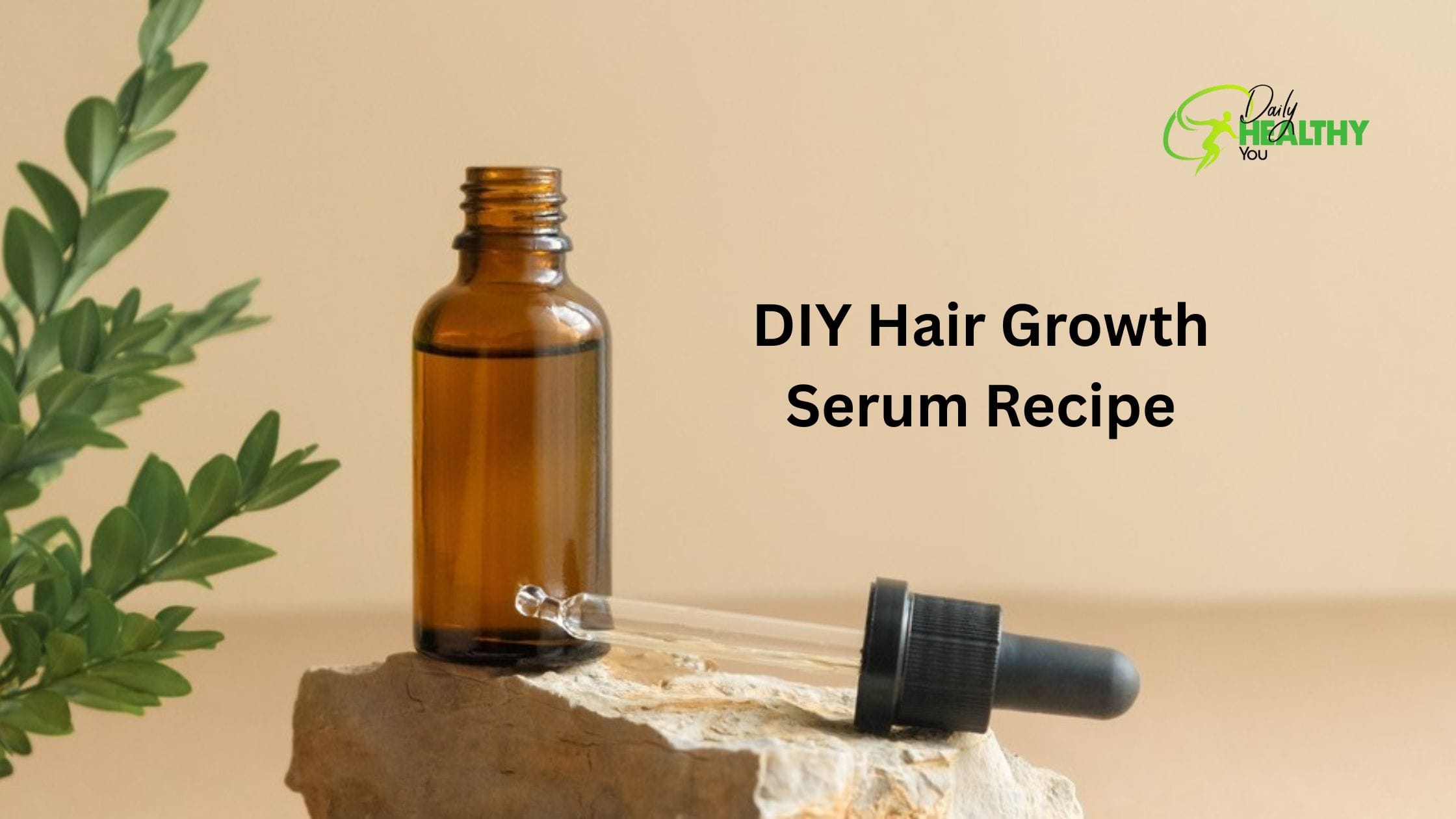
Hair Growth Serum Recipe
Hair growth and scalp health are topics that many of us care about deeply — whether you’re coping with thinning strands, slow growth, seasonal shedding, or simply striving for thicker, shinier hair. At Daily Healthy You we believe that nurturing your hair can begin right at home, with clean, natural ingredients and a little care. In this comprehensive guide you’ll learn why a homemade hair-growth serum works, what ingredients to use, how to make it, how to apply it, plus extra tips to support strong hair from the inside out.
Why Make Your Own Hair Growth Serum?
Commercial hair serums can be loaded with fragrances, synthetic preservatives, silicones and other chemicals that may do more harm than good — especially if your scalp is sensitive or your hair is suffering. A DIY serum gives you full control over what goes onto your scalp and strands.
Here are a few reasons you might choose to make your own:
- Ingredient transparency – you’ll know exactly what’s going in.
- Cost-effective – high-quality ingredients are often less expensive when purchased in bulk or reusable containers.
- Customizable – you can tweak the recipe for your hair type, scalp condition and preferences.
- Gentler on scalp – fewer irritants, fewer hidden additives.
- Mindful routine – the process itself becomes a nurturing ritual for you and your hair.
At Daily Healthy You we believe hair care should be simple, effective and empowering — and this DIY serum embodies that.
Understanding Hair Growth & What Affects It
Before diving into the recipe, it’s helpful to understand what influences hair growth and what may hold it back. Hair grows from follicles beneath your scalp; each follicle has a growth phase (anagen), a transitional phase (catagen) and a resting phase (telogen). When more follicles enter the resting phase than the growth phase, you’ll notice thinning or slower growth.
Key factors that affect hair growth:
- Genetics – your family history plays a role in your hair’s density and growth rate.
- Hormones – changes (pregnancy, postpartum, menopause, thyroid, etc.) can disrupt growth.
- Nutrition & lifestyle – deficiency in vitamins, minerals or high stress levels can impair hair health.
- Scalp health – a healthy scalp = stronger roots; conversely, inflammation, dryness or buildup can hinder growth.
- Hair care practices – over-styling, heat, chemical treatments and poor maintenance can damage strands and reduce visible growth.
By addressing scalp health and optimizing the environment from which your hair grows, you’ll improve your chances of thicker, healthier hair — and a well-crafted serum can support that.
What This Serum Targets
The DIY serum we’ll make works on a few fronts:
- Soothing and nourishing the scalp.
- Stimulating circulation around hair roots.
- Providing key nutrients (via herbs and oils) that support strong hair shafts.
- Creating a light, easily applicable base that encourages consistent use.
Because hair growth isn’t instant, consistency is the key. Using this serum regularly, along with the right internal support, gives you the best chance of noticing real improvement.
Ingredients You’ll Need
Here’s the ingredient list for the serum (tailored for home use, with notes on why each piece matters). You can source these ingredients internationally or locally and adjust slightly for availability.
Main ingredients:
- Distilled or purified water (about 1 cup / 240 ml) – This forms the base of the serum.
- Dried herb: Nettle leaf (2 tablespoons) – high in vitamins A, C and K, and minerals like iron and magnesium. These contribute to scalp health and potentially stimulate hair growth.
- Dried herb: Horsetail (2 tablespoons, optional) – rich in silica and known in traditional hair-care lore to support strong hair shafts and resilience.
- Aloe vera gel (2 tablespoons) – a soothing base that hydrates the scalp, calms irritation, and provides a good texture for the serum.
- Essential oils (10 drops each): Clary sage, rosemary, lavender – each of these has hair/scalp benefits: For example, rosemary has circulation-boosting properties, lavender is calming, clary sage supports oil balance.
Why these ingredients:
- Nettle supports circulation and nutrient delivery to the scalp.
- Horsetail gives structural support to hair through its silica content.
- Aloe vera provides hydration and comfort for the scalp, which can often be overlooked when focusing only on hair strands.
- Essential oils bring aroma, scalp stimulation, and additional botanical support.
- Water gives you a light, sprayable formula rather than a heavy oil-based product (which may feel too rich for some).
How to Make the Serum
Here is the step-by-step method to craft your own Daily Healthy You DIY Hair Growth Serum. The process is simple and takes about 25 minutes to prepare, then the serum sits in the fridge ready to use.
Instructions:
- In a small saucepan, bring your distilled water to a gentle boil.
- Remove from heat and add the dried nettle leaf and horsetail (if using). Cover, and let steep for at least 10 minutes (or until the water cools somewhat) so the herbs can infuse their nutrients into the liquid.
- Once the infusion has cooled to a comfortable temperature, strain out the herbs so you’re left with the clear herb-infused water.
- Pour the infused liquid into a clean spray bottle (ideally glass or BPA-free plastic).
- Add the aloe vera gel and mix/shake well so that it disperses evenly.
- Add your essential oils (clary sage, rosemary, lavender) and shake again.
- Label the bottle (date made) and store it in the refrigerator. It will keep up to 3 months when properly stored.
- Before each use, shake the bottle well to ensure the aloe and infusion are properly mixed.
Notes & customisations:
- Use a spray bottle with a fine mist for even distribution at the scalp.
- If you don’t have horsetail, omit it — the formula still works.
- If you’d prefer a richer version, you could make a smaller volume and replace part of the water with a lightweight carrier oil (e.g., jojoba) but the texture will change (not as light).
- Always do a patch test on your skin (inside of the elbow) 24 hours before full scalp use to check for sensitivity, especially when using essential oils.
- Keep in mind if you have a coloured label or dark bottle that helps protect contents from light and prolong quality.
How to Use the Serum for Best Results
Making the serum is one part — getting consistent usage is what leads to results. Here’s how to incorporate it into your hair-care routine.
Application instructions:
- Apply the spray liberally to the roots and scalp (rather than just the hair ends). The goal is to stimulate and nourish the base of hair growth.
- It works best when applied before bed (so the serum stays on overnight) or in the evening after cleansing the scalp.
- You can apply it once or more per day if you like, though once daily is sufficient for most.
- No need to rinse out — think of it as a leave-on treatment.
- Use it on either damp or dry hair, whichever your scalp tolerates better. If your hair is wet, allow some drying time; if dry, apply and let it absorb.
- For a gentle scalp massage: after spraying, use your fingertips to gently massage the scalp for 1–2 minutes to boost circulation and help the serum penetrate.
- Use consistently for at least 8–12 weeks before judging the effect, because hair growth is a slower process.
- Alongside the serum, continue your normal shampoo/conditioner routine — this is a complement, not a full replacement for cleansing or conditioning.
How to track results:
- Take photographs of your hair/parting area before you begin (so you can compare later).
- Pay attention to the feel of your hair and scalp: Is your scalp less itchy? Are baby hairs appearing? Are overall strands looking healthier?
- If you use heat styling or chemical treatments, note whether you reduce those — because reduced damage plus serum use often yields the best outcomes.
What Strengthens Hair Internally (Not Just Topically)
No serum (DIY or commercial) can do the full job if internal factors are neglected. At Daily Healthy You we believe in a holistic approach. Here’s what you can do from the inside:
Nutrition & hydration:
- Include protein — hair is made of keratin (a protein), so ensure your diet has adequate sources (legumes, eggs, fish, poultry, dairy, plant-based proteins).
- Get enough iron, zinc, vitamin D, biotin, vitamin A, vitamin C and magnesium — these all play roles in hair growth, scalp health and collagen production.
- Drink sufficient water — a hydrated scalp supports healthy follicle function.
- Include healthy fats — omega-3 fatty acids (in fish, flaxseed, walnuts) help maintain scalp health.
Stress & lifestyle:
- High stress levels trigger hormonal shifts and can push more hair follicles into the resting/drop-out phase. Incorporate stress-management: yoga, meditation, regular exercise, walk in nature.
- Sleep is restorative: aim for 7–9 hours of quality sleep so your body has time to repair and regenerate.
- Avoid smoking and excessive alcohol — these can impair circulation and nutrient delivery to the scalp.
Scalp hygiene & gentle care:
- Clean your scalp regularly (but don’t over-wash) to remove buildup of oils, products and dead skin cells.
- Be gentle with your hair — avoid tight hairstyles, harsh chemicals, excessive heat styling and rough brushing.
- Use a wide-tooth comb or detangle gently when hair is wet.
- Consider scalp treatments or exfoliation if you have buildup, dandruff or product residue.
Combining these internal factors with your topical DIY serum gives you the best shot at visible improvement.
What Results to Expect & When
It’s important to have realistic expectations. Hair growth takes time, and many people expect overnight changes — but real transformation takes a consistent effort.
- You may begin to see baby hairs or shorter regrowth within 6–8 weeks of consistent use.
- More noticeable length improvement might emerge around 3–4 months.
- If your hair was shedding heavily, or if hormones/nutrition are out of balance, improvement could take 6 months or more.
Also keep in mind that the formula supports healthy growth — it does not guarantee miraculous overnight length, and it won’t override severe underlying conditions (e.g., genetic hair loss, certain medical conditions). If you suspect those, it’s wise to consult a specialist.
Additional DIY Variations & Upgrades
If you enjoy DIY hair care and want to experiment, here are ways to tweak the formula — always following safety guidelines and patch-testing.
Variation ideas:
- Replace part of the water with coconut water or green tea (cooled) for additional botanical nutrients.
- Add a few drops of peppermint essential oil for scalp circulation (but no more than 5 drops, as it’s potent).
- Use a carrier oil base instead of water for a richer “oil-serum” (e.g., 50 ml jojoba + 20 drops rosemary + 10 drops lavender + 5 drops clary sage) — great for dry scalps but heavier on hair.
- Include a chewable or topical vitamin B complex (after consulting your doctor) if you suspect deficiency — though this is internal support, not part of the topical serum.
- Consider a weekly “scalp exfoliation” (gentle scrub or brush) prior to applying the serum for cleaner follicles and better penetration.
Seasonal tweaks:
- In humid seasons, keep it light (water base) and apply at night.
- In very dry or windy climates (like some parts of India), you may prefer a slightly richer oil-based version at bedtime.
- If you swim regularly (chlorine/saltwater), rinse hair promptly after and use the serum to mitigate stress to the scalp.
Conclusion
Creating your own DIY Hair Growth Serum is more than just a beauty experiment — it’s a mindful step toward healthier, stronger, and more confident hair. By using natural, nutrient-rich ingredients like nettle leaf, horsetail, aloe vera, and essential oils such as rosemary and lavender, you’re feeding your scalp with the care it truly needs. Unlike chemical-laden commercial products, a homemade serum is pure, customizable, and gentle on your skin and hair.
Remember, true results don’t happen overnight. Consistency, patience, and overall wellness — including good nutrition, reduced stress, and proper scalp hygiene — all play an essential role in promoting healthy growth. With regular use and a holistic approach, your hair can regain its shine, thickness, and vitality.
At Daily Healthy You, we believe in empowering individuals to take control of their self-care routines with safe, effective, and natural solutions. Whether it’s your smile or your strands, nurturing yourself from the inside out is the real secret to lasting beauty and confidence.