Yoga for Stress Relief: Yoga has long been touted as one of the best antidotes to stress, and it’s true. Of the many benefits that practicing yoga can offer, reducing stress really is one of them.
Here’s the surprise, though: You don’t need much time on the mat to get the stress-relieving benefits of yoga. Doing just one pose for a minute or two can help your system switch out of its stressed-out, fight-or-flight mode and shed some of that psychological tension. Here’s how it works, and why this movement practice is so helpful for managing stress.
Yoga for Stress Relief: What Is Yoga?
Yoga, translated from Sanskrit as “union,” is an ancient mind-body practice that originated in India. Not only does it involve movement, but also breathing techniques and meditation to help improve your mind-body connection and boost physical, mental, and emotional wellbeing.
There are many different types of yoga, all of which rely on poses, or asanas. Yoga practices can range from gentle, restorative sessions to more vigorous workouts.
9 Best Yoga Poses for Stress Relief
Below are nine poses to help you relieve stress and decompress. Do all of them in one session or pick one or two poses to do as needed. How long you hold each pose will depend on your body. Our experts recommend holding a pose only for as long as your body allows. The more tension you have in your body, the more time it may take you to relax.
1. Stick Pose (Yastikasana)
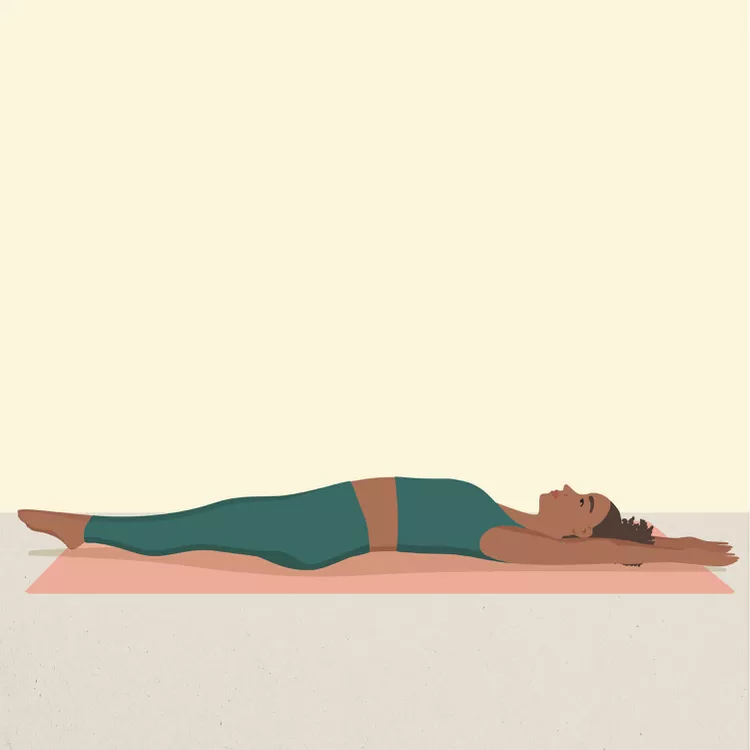
Lie face up on the floor with your legs extended and feet together. Extend your arms above your head so they’re resting on the ground, arms parallel with each other. From this position, inhale and stretch your body as long as you can, extending through your fingers and toes as if you’re trying to reach something at each end of you. Hold for five to 10 seconds, breathing deeply. Release and repeat two to three times.
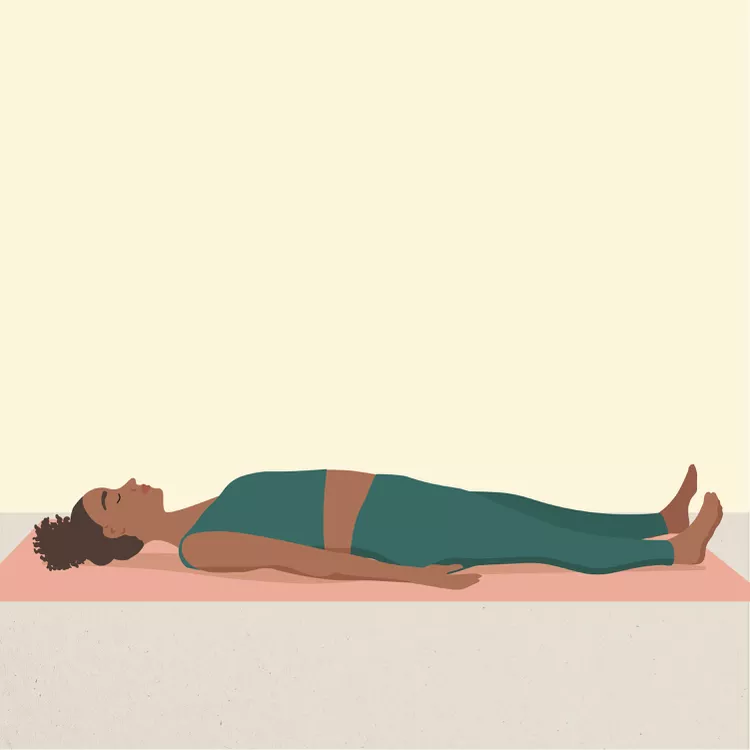
2. Corpse Pose (Savasana)
away from your torso with palms turned up. Relax your entire body from head to toes. Keep your spine neutral; if necessary, place a pillow under your knees to reduce lower back strain. Now relax. Stay here for five to 20 minutes.
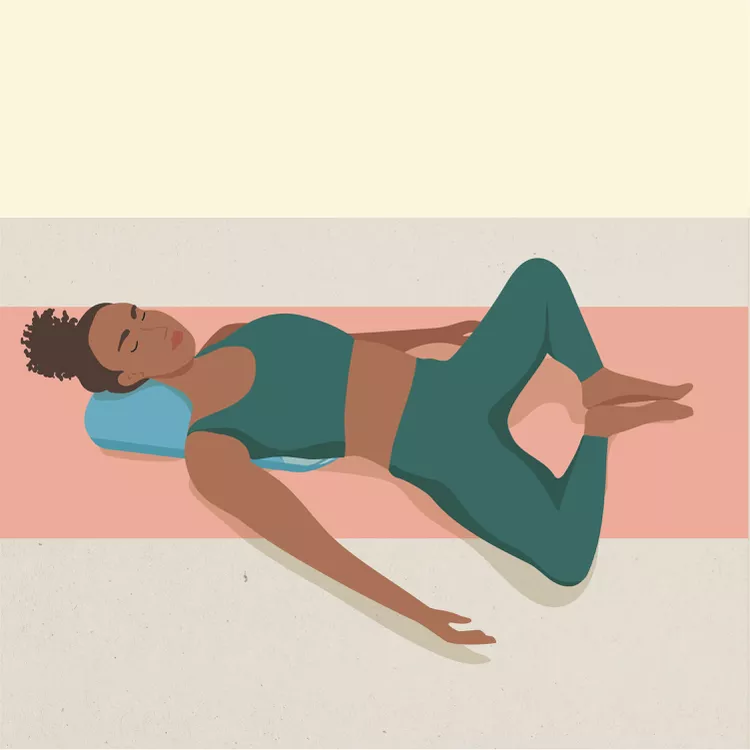
3. Reclining Bound Angle With Bolster (Supta Baddha Konasana)
Place a bolster (you can also use several folded-up blankets, or a rolled up towel) lengthwise on your mat and lie back on the bolster/blankets so they support your spine, neck, and head. Your tailbone and hips should be off the bolster and resting on the floor. Bring the soles of your feet together and let your knees fall open wide. (Place blocks, pillows, or rolled-up towels under each thigh or knees for added support.) Extend your arms to your sides, below shoulder height, palms facing up. Close your eyes and stay here for up to five minutes.
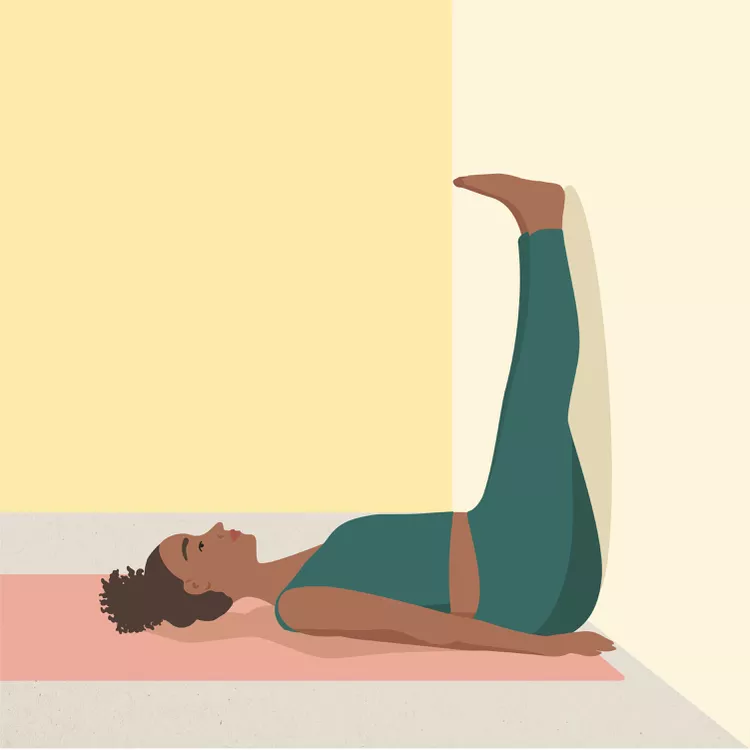
4. Legs Up the Wall Pose (Viparita Karani)
Sit with one side of your body against a wall. From this position, lie onto your back and move your legs so they’re extended up against the wall, feet either together or hip-width apart, and your ankles relaxed. If you have any lower body stiffness, you can move your hips a couple of inches away from the wall. Relax your arms at your sides, palms turned up, and hold for one to five minutes. If, though, you feel tingling or numbness in your feet, come out of the pose sooner, moving slowly.
5. Rag Doll Pose (Uttanasana Variation)
Stand with your feet hip-width apart. Bend your knees and fold forward from your hips. Let the crown of your head hang toward the ground and be heavy. Bend your elbows and grasp each elbow with the opposite hand. Hold here for 10 seconds to a minute, going deeper into the pose with each exhalation.

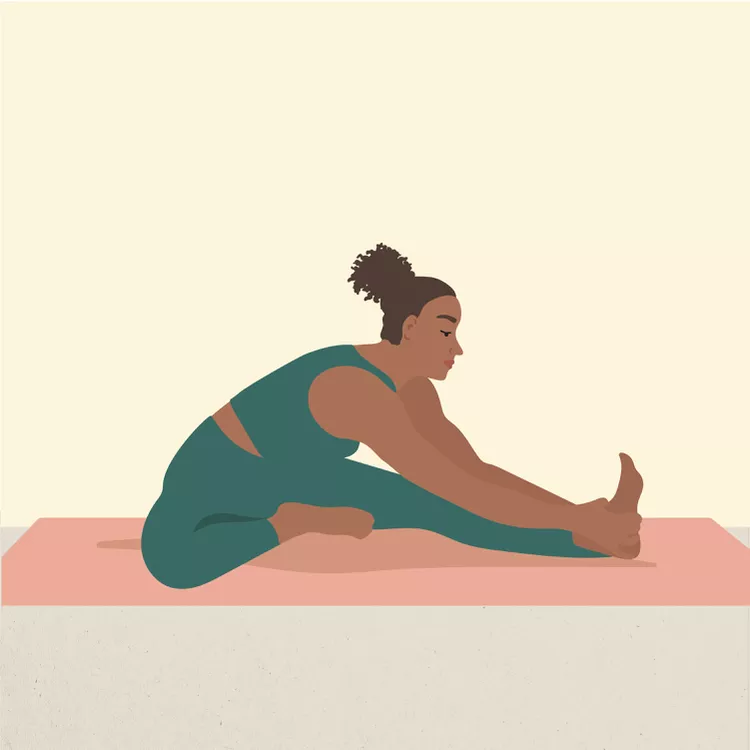
6. One-Legged Seated Forward Bend (Janu Shirasasana)
Sit on the floor with your legs extended in front of you. Bend your right knee and place your right foot against your left thigh. Sitting tall, extend both arms over your head as you stretch up. Exhale and bend forward from your hips over the left leg, keeping your neck elongated and shoulders relaxed. Rest your hands comfortably wherever you can reach on your left shin (no need to prove anything—listen to your body and stop where you’re comfortable). As you inhale, extend your spine longer, and as you exhale, fold over your leg more. Hold for 10 to 60 seconds. Release and repeat with the opposite leg extended.
7. Revolved Abdomen Pose (Jathara Parivartanasana)
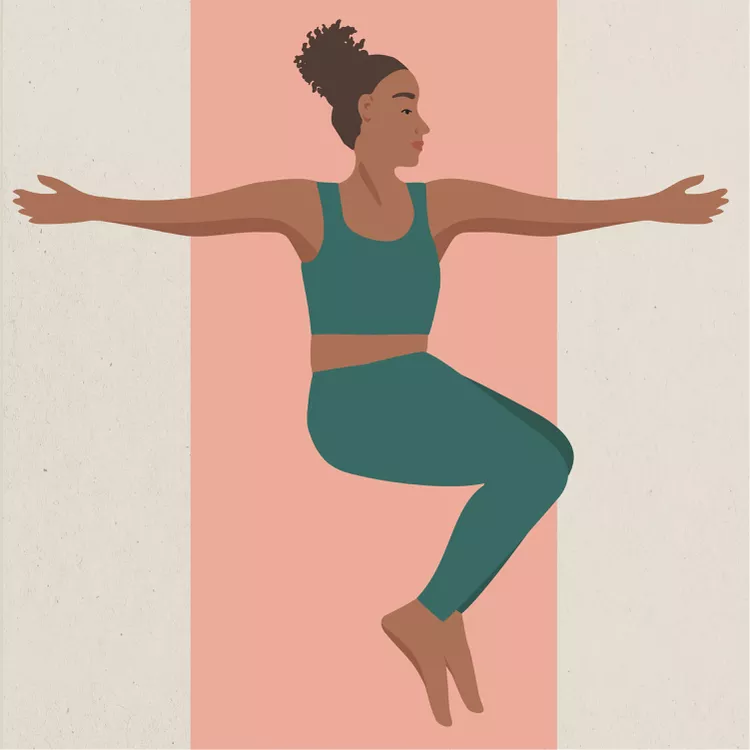
Lie face up on the floor with your arms extended to the sides at shoulder height, palms facing up. Bring your knees to your chest and slowly drop them to the right. Keeping your left shoulder on the floor, turn your head to the left and hold for 10 to 30 seconds. Release your knees to center and repeat to the other side.
8. Child’s Pose
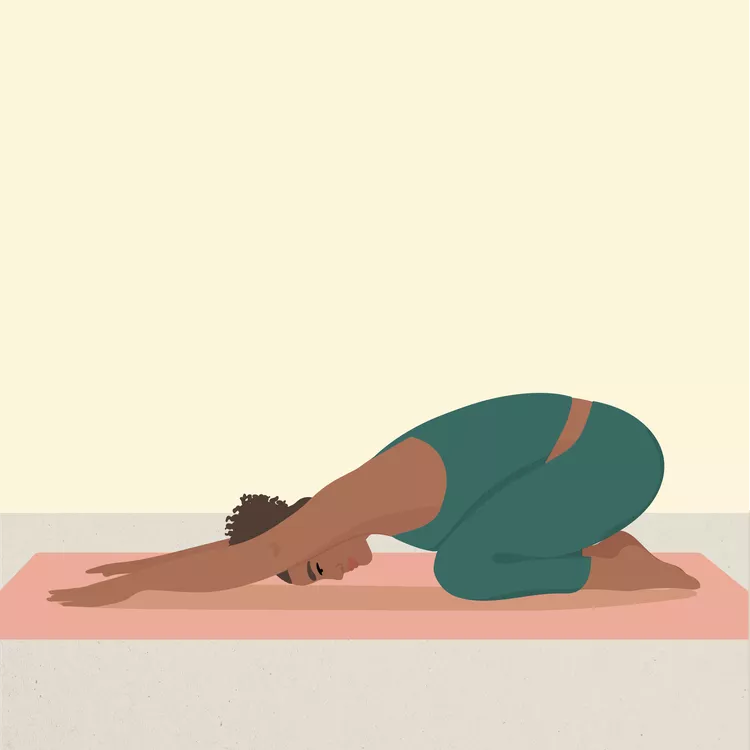
Start in a kneeling position with your knees together or slightly apart. Fold forward to bring your torso to rest on your legs, and allow your forehead to rest onto your mat, Anouska says. Arms can go out in front of you or by your sides. Stay here for five to 10 breaths, breathing deeply into your back body.
9. Reclined Pigeon Pose
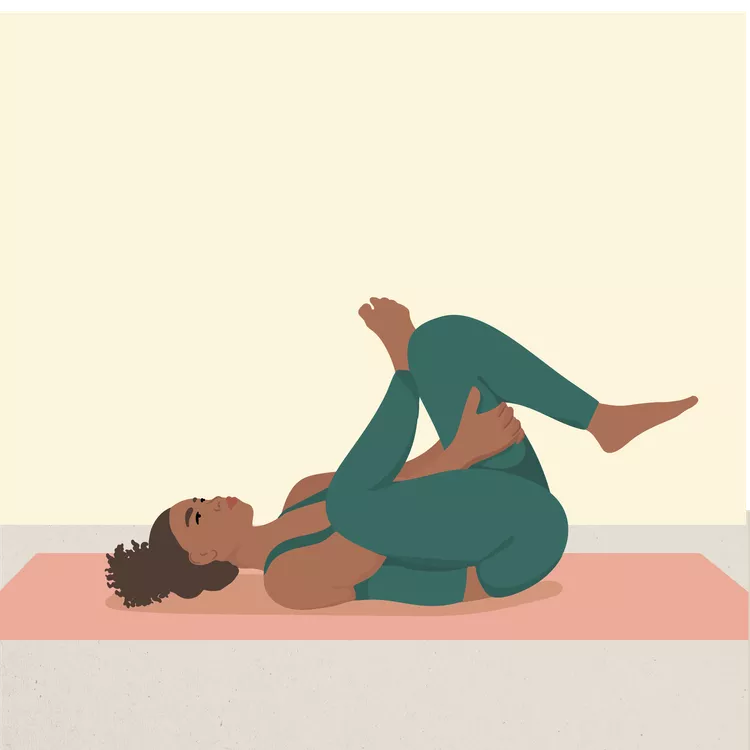
Start by lying on your back with your knees bent. Cross your right ankle over your left thigh with your ankle flexed, explains Anouska. Be sure that your foot hangs over the edge of your leg. “Interlace your hands behind your left thigh or, for a deeper stretch, around your left shin,” she says. Then, hug the legs in while thinking of sending your right knee away from your face. Stay in this position for five to 10 deep breaths and then switch sides.